
Foot & Ankle Arthritis Early Warning Signs Most People Ignore

Most people ignore Foot & Ankle Arthritis Early Warning Signs which Dr.Santhosh C Reddy explains in this blog.
Understanding Foot and Ankle Arthritis in Its Earliest Stages
Foot and ankle arthritis is a progressive joint condition that silently disrupts mobility long before severe pain forces attention. We frequently observe that early warning signs are overlooked or misattributed to routine fatigue, aging, or minor injuries. Under the expert guidance of Dr. Santhosh C Reddy at Stepsmartortho, we emphasize the importance of identifying subtle indicators that precede advanced joint degeneration. Early awareness enables timely intervention, preserves joint function, and significantly improves long-term outcomes.

Arthritis of the foot and ankle affects multiple joints, including the ankle joint, subtalar joint, midfoot joints, and forefoot joints. These structures bear the full weight of the body during movement, making them especially vulnerable to cartilage wear, inflammation, and biomechanical stress.
Why Early Detection of Foot and Ankle Arthritis Matters
We recognize that arthritis is not a sudden condition but a gradual process marked by cartilage breakdown, joint space narrowing, and chronic inflammation. When detected early, conservative management strategies can delay or even prevent irreversible joint damage. Ignoring early signs often leads to reduced mobility, chronic pain, deformity, and the need for surgical intervention.
Under clinical evaluation at Stepsmartortho, early-stage arthritis is approached with precision diagnostics, personalized treatment planning, and evidence-based care pathways that prioritize joint preservation.
Persistent Morning Stiffness in the Foot or Ankle
One of the most common early warning signs is morning stiffness lasting more than a few minutes. We observe that individuals often dismiss this symptom as normal, yet stiffness upon waking is a hallmark of inflammatory joint changes. As arthritis develops, synovial fluid thickens overnight, limiting joint lubrication and flexibility.

Stiffness that improves slightly with movement but returns after periods of rest is particularly significant. This pattern indicates early cartilage deterioration and inflammatory activity within the joint.
Intermittent Pain During Weight-Bearing Activities
Foot and ankle arthritis frequently presents as intermittent pain, especially during walking, climbing stairs, or standing for extended periods. We note that early pain is often mild, localized, and activity-related, leading many to delay medical evaluation.
Pain that worsens on uneven surfaces or during push-off phases of walking may indicate early degeneration of the ankle joint or midfoot joints. Over time, this pain becomes more frequent and intense, signaling advancing arthritis.
Subtle Swelling and Warmth Around the Joint
Early arthritis may cause mild swelling, warmth, or tenderness around the foot or ankle joint. We stress that even minimal swelling is clinically relevant, as it reflects inflammatory processes within the joint capsule.

Unlike acute injuries, arthritic swelling is often persistent and may fluctuate rather than resolve completely. This subtle sign is frequently overlooked but provides critical insight into joint health when assessed early.
Reduced Range of Motion and Joint Flexibility
We consistently identify loss of joint flexibility as an early indicator of arthritis. Patients may notice difficulty bending the ankle fully, pointing the toes, or adapting the foot to uneven ground. These limitations result from cartilage thinning, osteophyte formation, and capsular tightening.
Reduced range of motion compromises gait efficiency and increases stress on surrounding joints, accelerating disease progression if left unaddressed.
Changes in Gait and Walking Pattern
Alterations in walking mechanics are a silent yet telling sign of foot and ankle arthritis. We observe that individuals subconsciously adjust their gait to avoid discomfort, leading to limping, shortened stride length, or uneven weight distribution.

These compensatory changes place additional strain on the knees, hips, and lower back, creating a chain reaction of musculoskeletal issues. Early gait assessment allows targeted interventions that restore alignment and reduce joint overload.
Localized Tenderness and Joint Sensitivity
Early arthritis often manifests as localized tenderness when pressure is applied to specific areas of the foot or ankle. This sensitivity may be mistaken for soft tissue strain but typically persists despite rest or over-the-counter remedies.
Tenderness along joint lines is a key clinical finding that differentiates arthritic changes from temporary injuries.
Gradual Development of Joint Deformity
In the initial stages, joint deformity may be subtle, such as slight changes in foot shape or arch height. We emphasize that even minimal structural alterations warrant professional evaluation. Over time, untreated arthritis can lead to visible deformities, including collapsed arches, bony enlargements, and misalignment of toes.

Early intervention helps maintain anatomical integrity and prevents functional impairment.
Risk Factors That Increase Susceptibility
We identify several factors that significantly increase the risk of developing foot and ankle arthritis:
- Previous ankle fractures or ligament injuries
- Repetitive high-impact activities
- Obesity and excess body weight
- Biomechanical abnormalities
- Inflammatory joint diseases
- Advancing age
Recognizing these risk factors allows proactive monitoring and early diagnostic assessment.
Diagnostic Approach at Stepsmartortho
At Stepsmartortho, we employ a comprehensive diagnostic approach guided by Dr. Santhosh C Reddy, integrating detailed clinical examination, gait analysis, and advanced imaging when necessary. Early-stage arthritis may not always appear prominently on standard X-rays, making expert clinical judgment essential.
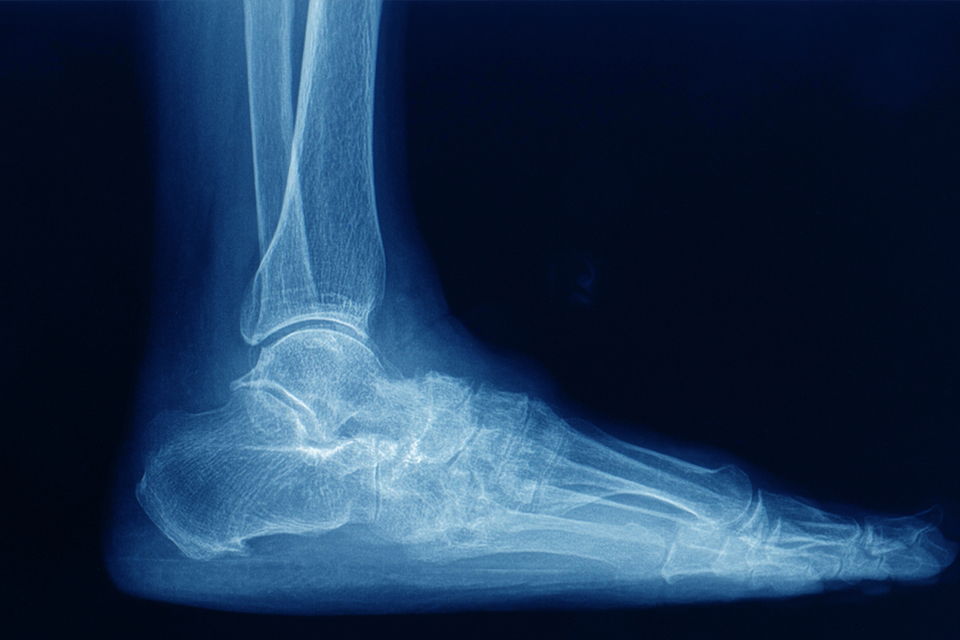
Accurate diagnosis ensures that treatment strategies are appropriately tailored to disease stage and individual patient needs.
Early Management Strategies for Foot and Ankle Arthritis
We prioritize non-surgical management during the early stages of arthritis to preserve joint function and alleviate symptoms. Evidence-based strategies include:
- Activity modification to reduce joint stress
- Custom orthotics for biomechanical correction
- Targeted physiotherapy to improve strength and flexibility
- Anti-inflammatory measures for symptom control
- Weight management to reduce load on joints
These interventions are most effective when initiated promptly, reinforcing the value of early recognition.
Long-Term Benefits of Early Intervention
We consistently observe that patients who address early warning signs experience better mobility, reduced pain, and delayed disease progression. Early intervention minimizes the likelihood of advanced arthritis requiring invasive procedures and supports sustained quality of life.
Through expert-led care, education, and ongoing monitoring, Stepsmartortho remains committed to helping individuals maintain active, pain-free movement for as long as possible.
Taking Early Symptoms Seriously
Foot and ankle arthritis rarely begins with severe pain. Instead, it announces itself through subtle, persistent signals that are easy to ignore. We advocate for heightened awareness of these early warning signs and timely consultation with experienced specialists.
Proactive attention to joint health is the most effective strategy for preserving mobility and preventing long-term disability.